
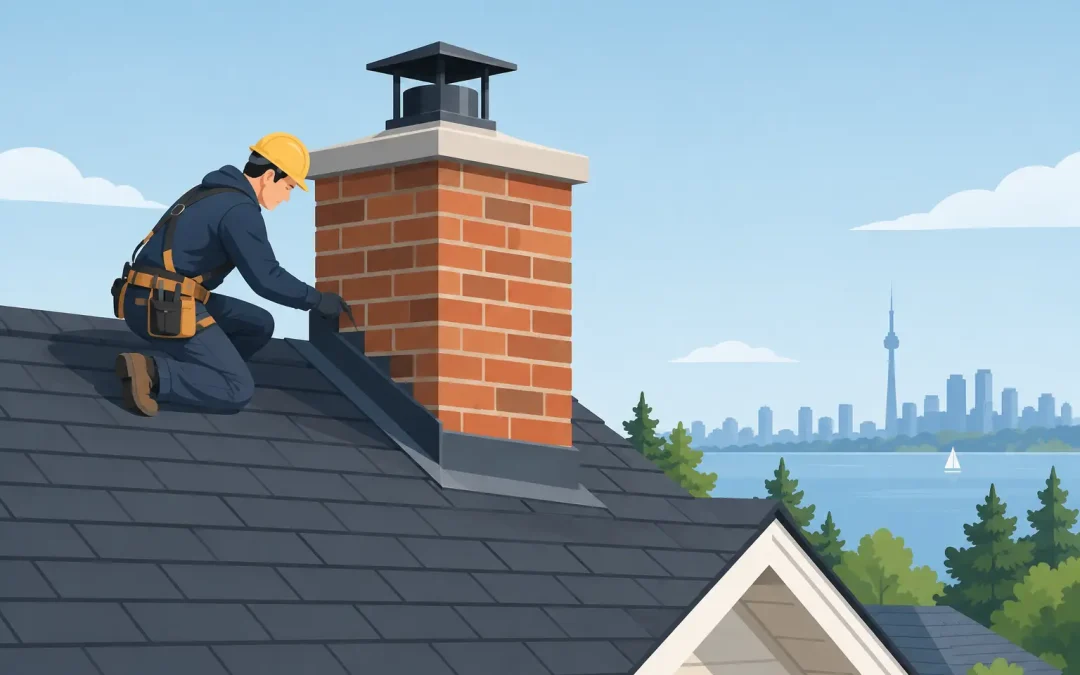
A chimney that is crumbling above the roofline is more than an eyesore. Loose brick, failing mortar and damaged flashing can allow water into the roof structure, while an unstable stack can become a real safety concern. The cost to rebuild chimney above roof depends on how much masonry must come down, how safely the crew can access it and whether the roof connection needs repair at the same time.
For homeowners in Burlington, Oakville, Mississauga, Hamilton and nearby communities, a roof-up chimney rebuild is often the sensible answer when the exposed portion has deteriorated but the lower chimney remains sound. It removes failed material rather than covering it with a short-term patch, then rebuilds the stack with proper brickwork, mortar, flashing and a suitable cap.
Typical Cost to Rebuild a Chimney Above the Roof
A straightforward rebuild of a small chimney above the roof may cost several thousand dollars. A larger, taller or difficult-to-access chimney can cost considerably more. In Southern Ontario, many roof-up chimney rebuilds fall roughly in the $4,000 to $10,000-plus range, but that is a planning figure, not a substitute for an inspection and written quote.
The lower end may apply when a short section of accessible chimney can be dismantled and rebuilt using readily available brick. The higher end is more likely when the chimney is tall, severely damaged, built with specialty brick, located on a steep roof or requires substantial roof, flashing or liner work.
A price that sounds unusually low deserves a closer look. A proper rebuild involves controlled removal of unsafe masonry, protecting the roof, rebuilding the stack true and plumb, installing appropriate flashing and leaving the site clean. Omitting any of those steps can turn a cheap repair into another expense a few winters later.
What Changes the Price of a Roof-Up Chimney Rebuild?
Every chimney has its own condition, location and construction. The most reliable way to price the work is to inspect the chimney from the roof level, not simply from the driveway. These are the main factors a chimney specialist will assess.
Height, size and amount of masonry
The number of courses being rebuilt matters, but so does the width of the stack and the number of flues. A large chimney with two or three flues requires more brick, more mortar and more time than a narrow single-flue chimney. If deterioration reaches farther down than first expected, rebuilding only the visible top section may not leave a stable base for the new work.
Many older homes have chimneys that look acceptable from the ground but show open joints, loose bricks or worn crowns once inspected closely. Rebuilding down to sound masonry is the right approach, even when it increases the scope.
Roof pitch and access
Safe roof access has a meaningful effect on cost. A low bungalow roof with clear access is very different from a tall, steep roof over a landscaped property or tight side yard. Ladders, roof protection, scaffolding, staging and careful material handling may all be needed.
Access is not an optional extra. Masonry is heavy, and loose material must be brought down safely without damaging shingles, gutters, siding or the surrounding property. A contractor should allow for the labour and safety equipment needed to do this properly.
Brick matching and appearance
Brick matching can affect both material cost and the finished appearance. On an older Burlington, Oakville or Hamilton home, the original brick may no longer be manufactured. A close match may need to be sourced, or reclaimed brick may be considered where appropriate.
Homeowners sometimes ask whether all new brick can be used above the roofline. In some cases, that is practical because the chimney is less visible. On a prominent front elevation, however, a closer colour and texture match can be worth the added effort. The goal is not only a structurally sound chimney, but one that belongs on the home.
Flashing, crown and chimney cap
The base of the chimney is one of the most common places for a roof leak to begin. During a rebuild, existing flashing may be removed, disturbed or found to be past its service life. New step flashing, counterflashing and roof repairs may be required to create a proper weather-tight connection.
The chimney crown also matters. A cracked or poorly sloped crown lets water enter the masonry below. A correctly formed crown projects beyond the brickwork and directs water away from the stack. A cap or rain cover can help keep rain, snow and animals out of an open flue, although the right cap depends on the heating appliance and venting system.
Liner and flue condition
A roof-up rebuild does not automatically include chimney liner work, but the liner should be considered if the chimney serves a fireplace, furnace, water heater or other appliance. A damaged clay liner, improperly sized liner or deteriorated flue can create a separate safety and performance issue.
If the chimney is no longer in use, removal rather than rebuilding may be the better investment. This is particularly true where the chimney has no active purpose and has become a recurring source of leaks and maintenance. Chimney removal should include careful roof closure and shingle repair, not simply taking the stack down and leaving a weak roof detail behind.
Rebuild, Repair or Removal: Which Is Worth Paying For?
Tuckpointing and individual brick replacement can be effective when the chimney is generally solid and deterioration is limited. Repointing replaces failing mortar joints; it does not correct a chimney that has shifted, spalled extensively or lost its structural integrity.
A rebuild is usually the better long-term choice when bricks are loose, faces are breaking away, mortar has failed across much of the exposed stack, the chimney is leaning, or repeated repairs have not stopped water entry. Building from a sound point upward gives the new masonry a proper foundation.
Removal makes sense when an unused chimney is badly deteriorated, when it no longer serves an appliance, or when the homeowner wants to eliminate future maintenance. It is not automatically the least expensive choice, because roof framing, sheathing and shingles still need professional attention after the masonry is removed.
The right recommendation should be based on the chimney’s condition, not on selling the largest possible job. A good inspection distinguishes between repairable surface wear and masonry that has reached the end of its useful life.
What a Proper Quote Should Explain
A clear chimney rebuild quote should describe the extent of demolition and rebuilding, the materials to be used, and the roof and flashing work included. It should also state whether disposal, access equipment, brick matching, cap installation and any liner work are part of the price.
Before approving the work, make sure you understand these practical details:
- How far down the chimney will be dismantled to reach sound masonry.
- Whether new flashing and any necessary roof repairs are included.
- How the roof, landscaping and surrounding areas will be protected.
- What happens if hidden damage is discovered after removal begins.
This conversation helps prevent surprises. It also gives you a better basis for comparing quotes. Two prices may look different because one covers a full roof-up rebuild with flashing while another only allows for cosmetic repointing around failing brick.
Why Waiting Can Increase the Cost
Ontario freeze-thaw cycles are hard on exposed chimneys. Water enters a small crack or open mortar joint, freezes, expands and gradually breaks brick faces and joints apart. Once the masonry opens up, more water gets in. The deterioration often accelerates through a few wet winters.
There is also the risk of water travelling behind damaged flashing and into the roof deck, attic or ceiling below. What began as a masonry repair can then involve roofing, wood repair and interior water damage. Addressing loose brick, spalling and leaking early usually gives the homeowner more options and better control over the budget.
At Wm. Townshend Limited, roof-up chimney rebuilding is approached as specialized masonry work, not a quick patch from a general repair crew. With a family trade heritage dating to 1925 and more than 40 years serving local homeowners, the focus is on assessing what the chimney actually needs and completing the work with care.
If your chimney has crumbling mortar, loose bricks, white staining, missing crown material or a persistent leak near the stack, arrange an inspection before another season of weather gets into it. A clear assessment of the condition and scope is the best first step toward a chimney repair that protects both your roof and your home.
Recent Comments