
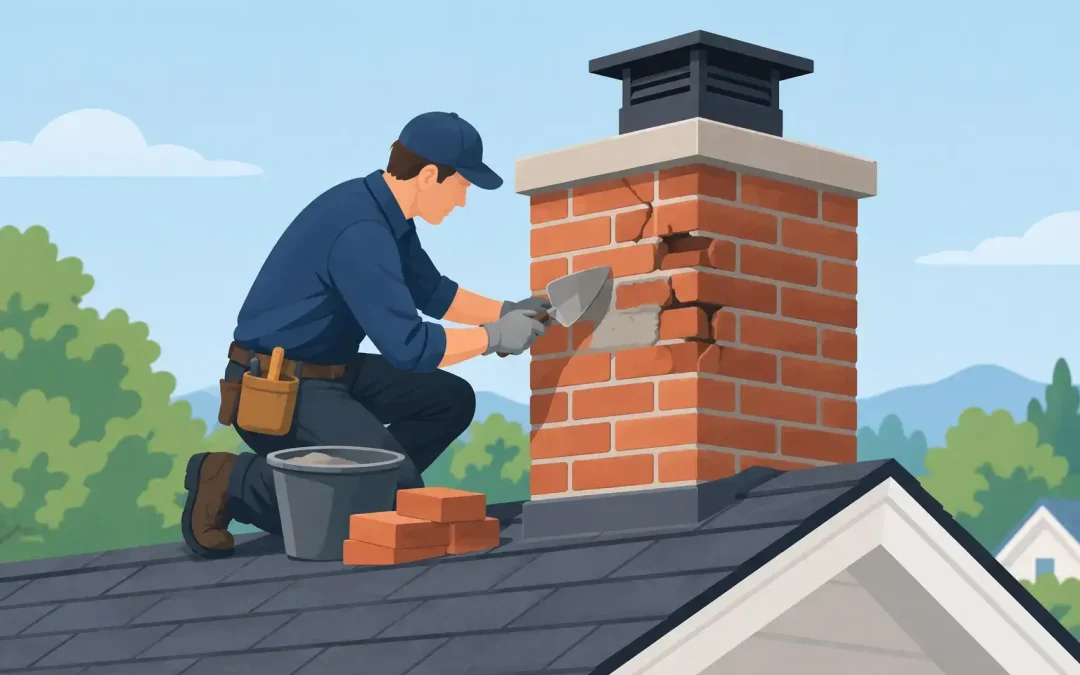
A chimney can look like a small exterior problem until a few loose bricks become a leak, a safety concern, or a costly roof repair. Knowing how to repair a damaged chimney starts with recognizing that the visible damage is not always the full story. In Southern Ontario, repeated freeze-thaw cycles, driving rain, snow, and years of heat can break down masonry from the top down.
For homeowners in Burlington, Oakville, Mississauga, Hamilton, and nearby communities, the right repair depends on the chimney’s condition. Some need careful tuckpointing. Others need damaged bricks replaced, a new chimney liner, or a roof-up rebuild. The goal is not to make an aging chimney look better for a season. It is to restore a sound, weather-resistant structure that will protect the home.
Start by Identifying the Type of Chimney Damage
A close look from the ground can tell you when it is time to call for an inspection. Crumbling mortar joints, cracked or missing bricks, white staining, rust around the flashing, and water marks inside the home all deserve attention. A leaning chimney, loose bricks near the top, or pieces of masonry on the roof or ground should be treated as urgent.
Spalling is one of the most common problems on older brick chimneys. It occurs when moisture enters the face of the brick, freezes, expands, and causes the surface to flake or break away. Once a brick has spalled badly, coating over it or filling the face with mortar is not a lasting repair. The affected brick normally needs to be removed and replaced.
Mortar failure is different. If the bricks are still solid but the joints are recessed, cracked, or falling out, repointing may be appropriate. This involves removing deteriorated mortar to a proper depth and installing compatible new mortar. Done properly, tuckpointing helps keep water out and supports the bricks around it. Done poorly, it can trap moisture or damage softer heritage brick.
How to Repair a Damaged Chimney: Match the Repair to the Cause
There is no single repair for every damaged chimney. A proper assessment should consider the masonry, chimney crown, flashing, liner, roof connection, and whether water is entering from above or through the brickwork itself.
Repoint failing mortar joints
When deterioration is limited to the mortar, tuckpointing can extend the life of the chimney considerably. The old joints are carefully cleaned out, then repointed with mortar suited to the age and condition of the existing brick. Matching mortar strength matters. On many older homes, mortar that is too hard can force moisture into the brick and contribute to future spalling.
This is detailed work, especially above the roofline. The joints must be properly prepared, filled, tooled, and cured. Smearing new mortar across the face of old joints may look acceptable at first, but it will not provide the same weather resistance or bond.
Replace spalled, cracked, or loose bricks
Individual brick replacement can be a practical solution when the damage is isolated. The damaged units are removed without disturbing sound surrounding masonry, and new bricks are installed with matching mortar. Colour and texture may not be identical on every older chimney, but an experienced masonry contractor will aim for a repair that blends in while, more importantly, performs properly.
If spalling is widespread, brick replacement one unit at a time may not be the sensible long-term choice. It can become more expensive than rebuilding the upper chimney section, and it may leave weak masonry behind.
Repair the crown and flashing
The chimney crown is the concrete or mortar cap at the top of the stack. It should shed water away from the brickwork. Cracks, poor slope, or an overhanging edge that has broken away can allow water to run directly into the chimney.
Flashing is equally important. It seals the joint where the chimney meets the roof. Staining in the attic, ceiling marks near the chimney, or dampness after wind-driven rain may point to failed flashing rather than failed brick. In some cases, both issues are present. Repairing masonry without correcting a leaking crown or flashing detail simply allows the damage to continue.
Rebuild the chimney above the roofline
A roof-up chimney rebuild is often the right answer when bricks are extensively deteriorated, the stack is unstable, mortar failure is widespread, or previous patchwork has reached its limit. The unsafe section is taken down and rebuilt using suitable materials and proper flashing details.
This is one of the most dependable ways to address serious chimney deterioration because it removes compromised masonry instead of trying to hold it together with surface repairs. It also gives the contractor a chance to inspect the roof connection and rebuild the chimney with a correctly formed crown and sound water management.
A rebuild is a larger investment than tuckpointing, but it can be the better value when the existing upper section is near the end of its service life. A good contractor should explain why a repair is sufficient or why rebuilding is the safer choice, rather than recommending the same solution for every chimney.
Check the liner and interior system
Exterior masonry and the chimney liner are connected, but they are not the same repair. A chimney can appear solid outside while the liner is damaged, undersized, or unsuitable for the appliance it serves. Conversely, a failing exterior stack can expose or affect the liner.
If the chimney vents a fireplace, furnace, water heater, or wood-burning appliance, liner condition should be considered during the inspection. Cracked flue tiles, moisture damage, and liner issues can affect safe operation. Do not assume exterior brickwork alone resolves every chimney concern.
Repairs Homeowners Should Not Attempt
Small cosmetic cleaning from ground level is one thing. Climbing onto a roof to repair a chimney is another. Chimney work involves height, unstable masonry, roof safety, dust, falling debris, and in some cases an active flue system. Loose bricks can shift unexpectedly once mortar is disturbed.
Avoid using caulking, paint, waterproof coatings, or patching compounds as a substitute for masonry repair. These products can hide symptoms temporarily, but they do not replace failed mortar or brick. Some coatings can also prevent the masonry from drying properly, which creates more trouble through a Southern Ontario winter.
A homeowner can help by keeping gutters clear, watching for new stains or debris, and arranging an inspection before minor deterioration becomes structural. The repair itself should be handled with the right access equipment, materials, and understanding of how the chimney ties into the roof.
When Chimney Removal May Make More Sense
Not every damaged chimney needs to be rebuilt. If it no longer serves an active appliance and has deteriorated beyond practical repair, removal may be the better option. A proper chimney removal includes restoring the roof where the stack was located, not simply taking down brick and leaving a vulnerable opening behind.
This decision depends on the home’s heating system, the chimney’s condition, and the owner’s plans for the property. For an unused stack that is leaking or unstable, removal can eliminate an ongoing maintenance concern. For a working fireplace or heritage-style home, rebuilding may better preserve function and appearance.
Get a Clear Scope Before Work Begins
Before approving chimney repairs, ask what has failed, why it failed, and what work is included at the roofline. A useful scope should distinguish between brick replacement, repointing, crown work, flashing repair, liner work, rebuilding, and any roof repairs required. It should also explain whether the recommendation addresses the source of water entry or only the visible damage.
Wm. Townshend Limited has served local homeowners for more than four decades, with family trade roots dating back to 1925. For a chimney that is visibly deteriorating, leaking, or shedding brick, a focused inspection can provide the practical answer: targeted repair, roof-up rebuild, or removal with the roof properly restored.
A damaged chimney rarely improves on its own. Addressing loose mortar or spalling brick while the repair is still manageable can keep a small exterior warning from becoming the next winter’s leak.
Recent Comments