
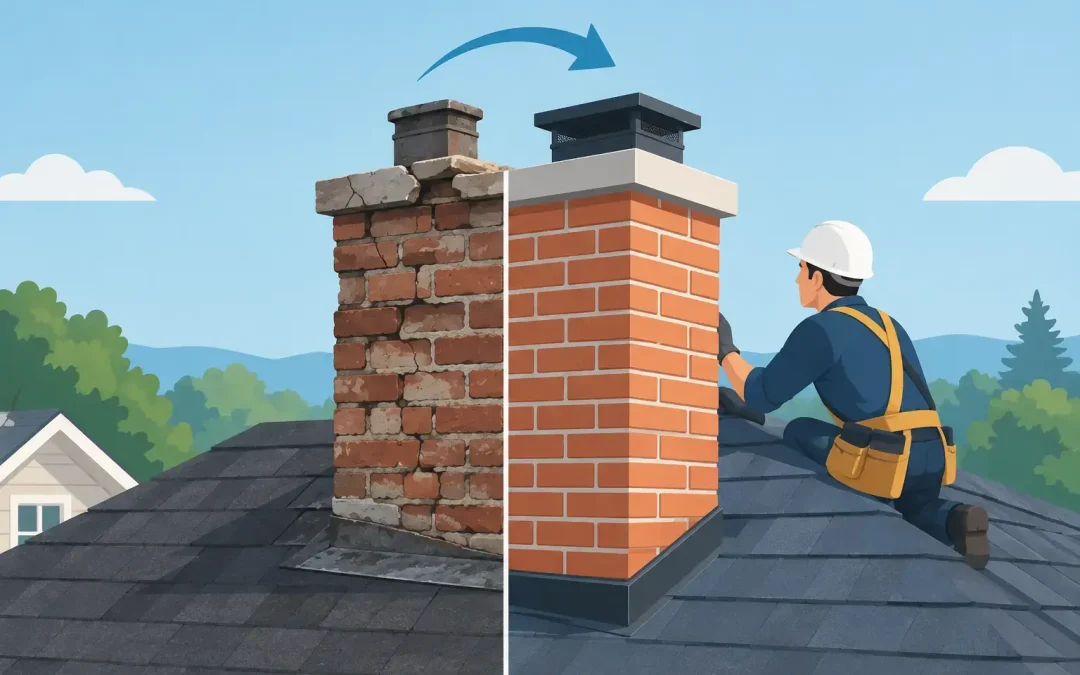
A chimney can look solid from the ground while the masonry above the roofline is steadily failing. When homeowners ask about “rebuilding chimney from roof up,” they are usually dealing with loose bricks, crumbling mortar, water leaks, spalling brick, or a chimney that no longer feels safe. These are not problems to cover with a quick patch. In many cases, removing the damaged section and rebuilding it properly is the safer, longer-lasting choice.
Southern Ontario weather is particularly hard on exposed chimney masonry. Rain enters small cracks, freezing temperatures expand that moisture, and years of movement gradually weaken mortar joints and brick faces. The portion above the roof receives the worst of it. A roof-up rebuild addresses that exposed, deteriorated section while preserving sound masonry below the roofline where possible.
When a Roof-Up Chimney Rebuild Is Needed
A roof-up rebuild is not automatically required for every crack or missing mortar joint. A chimney inspection should determine how far the deterioration extends and whether the lower stack remains structurally sound. If the damage is limited to a few joints, tuckpointing or localized brick repair may be enough. If bricks are loose, faces are spalling away, the stack is leaning, or mortar has failed across much of the chimney, rebuilding is often the responsible recommendation.
One common sign is repeated leaking around the chimney. Roof flashing can certainly fail, but water may also be entering through open mortar joints, cracked crowns, damaged brick, or an unstable cap. Replacing flashing alone will not solve a masonry leak if the chimney itself is absorbing water.
Another concern is a chimney that appears to be shedding material. Pieces of brick, mortar, or a broken chimney crown on the roof or ground should not be ignored. A failing chimney can become a safety issue, especially after a winter of freeze-thaw cycles or a severe storm.
Older homes in Burlington, Oakville, Mississauga, Hamilton, and nearby communities often have chimneys built with materials that have reached the end of their practical service life. The goal is not to replace masonry simply because it is old. The goal is to restore the chimney when its condition no longer supports a reliable repair.
What Rebuilding a Chimney From Roof Up Involves
A proper roof-up rebuild begins with a close assessment of the chimney, roof intersection, flashing, crown, and visible mortar joints. The contractor needs to establish where solid masonry begins. Rebuilding should stop at a stable point, not at an arbitrary course of brick.
The damaged upper chimney is carefully dismantled, with attention paid to protecting the roof and surrounding property. Loose or deteriorated material is removed down to sound masonry. From there, the chimney is rebuilt using suitable brick, mortar, and proper bonding techniques. On an older home, matching the existing brick as closely as practical matters. A good repair should not look like an afterthought on the roof.
The rebuilt stack needs more than new brick. It also needs the details that keep water out: properly installed flashing at the roofline, a sound chimney crown, and an appropriate cap or rain cover where required. If the chimney serves a fireplace, wood stove, furnace, or water heater, the liner and venting arrangement should also be considered before the rebuild begins.
This is why chimney work should be handled by a focused masonry specialist rather than treated as a simple roofing add-on. The roof and chimney meet at a vulnerable point, but each has its own technical requirements. Masonry must be stable, weather-resistant, and properly bonded. Flashing must direct water away without relying on caulking as the primary defence.
The chimney liner may affect the scope
A roof-up rebuild does not always mean liner work is required. It depends on the appliance, the existing liner condition, and how the chimney is used. However, this is the right time to inspect the liner, particularly if there has been water entry, venting trouble, a change in heating equipment, or visible deterioration around the flue.
A new chimney exterior cannot correct an unsafe or undersized liner. Likewise, a liner replacement cannot make a structurally unsound masonry stack safe. Each part should be assessed as part of the same chimney system.
Why Patching Can Become the Expensive Option
Homeowners understandably want to avoid a full rebuild if a repair will do. That is sensible. The problem comes when a failing chimney receives cosmetic patching year after year. A little mortar is added, a crack is sealed, and the issue appears better for a season. Meanwhile, water continues behind the repair, bricks continue to spall, and the weakened stack remains exposed.
There is a place for tuckpointing and brick repair. They are effective when the underlying masonry is stable and deterioration is limited. But when mortar failure is widespread or bricks have lost their strength, new mortar alone can trap homeowners in a cycle of repeat service calls.
A roof-up rebuild costs more than a small patch because it involves dismantling, rebuilding, material matching, roof protection, flashing work, and skilled masonry labour. The trade-off is that it deals with the actual source of the problem. For a chimney that has reached structural failure above the roofline, that is usually the better value over time.
How to Prepare for Chimney Work
Most chimney rebuilding projects are completed from the exterior, but homeowners can make the process easier by clearing access around the driveway and side of the home. Contractors may need room for ladders, scaffolding, material delivery, and debris removal. If the chimney connects to a working fireplace or fuel-burning appliance, ask whether it needs to remain out of service during the project.
Weather can affect scheduling. Masonry work requires suitable conditions for mortar and safe access to the roof. Experienced local contractors plan around the forecast, protect exposed areas during the work, and avoid rushing masonry when temperatures or rain could compromise the result.
Before approving the work, homeowners should understand what is included in the scope. Ask where the rebuild will begin, whether new flashing and a crown are included, how debris will be handled, and whether the contractor has identified any liner concerns. A clear quote should describe the work in straightforward terms rather than leaving critical roof or masonry details open to interpretation.
Choosing the Right Chimney Specialist
A chimney rebuild is not a place to choose solely on the lowest number. The best contractor for the job is one who can explain why rebuilding is needed, where sound masonry starts, and how the chimney will be protected from water once the work is complete. You should feel comfortable asking questions and expect clear answers.
Wm. Townshend Limited has served Southern Ontario homeowners for more than four decades, with a family trade heritage dating to 1925. That kind of experience matters when a chimney needs more than surface repair. The work must be completed with care for the home, the roof, and the masonry that remains.
If your chimney has loose bricks, crumbling joints, water stains near the fireplace, or visible deterioration above the roofline, arrange an inspection before another winter makes the problem larger. A timely roof-up rebuild can protect the structure you already have and give your home a chimney built to stand up to the weather again.
Recent Comments