
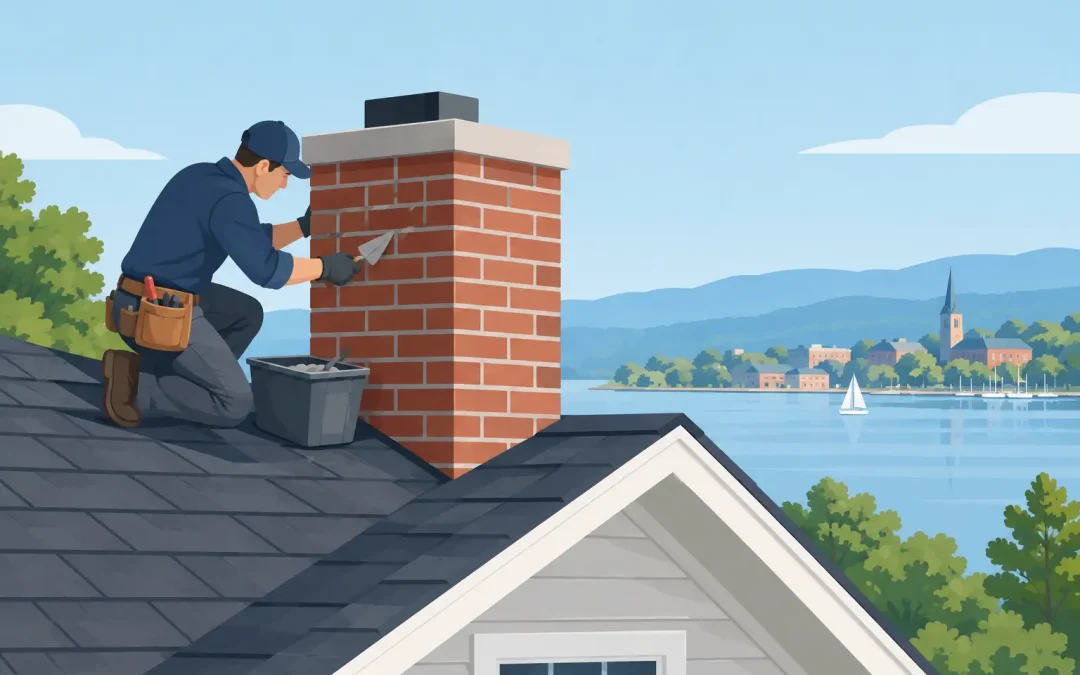
A chimney can look like a small part of the roofline, but it is exposed to more weather than almost any other part of your home. When bricks are loose, mortar is crumbling, or water is finding its way indoors, a chimney rebuild Burlington homeowners arrange promptly can prevent a much larger repair later. The right solution is not always a full rebuild, but when the structure has deteriorated beyond a safe repair, rebuilding the chimney properly is the sensible long-term choice.
When Does a Chimney Need Rebuilding?
Most chimneys do not fail all at once. Southern Ontario freeze-thaw cycles allow water into small cracks, then expand those cracks as temperatures fall. Over time, mortar loses its grip, brick faces break away, and the upper chimney can become unstable.
A few cracked joints do not automatically mean the whole chimney has to come down. Localized tuckpointing or brick replacement may be enough where the damage is minor and the remaining masonry is sound. A rebuild becomes more likely when deterioration extends through several courses of brick, the chimney is leaning, or repairs have been repeated without addressing the underlying cause.
Watch for spalling bricks, which shed their outer face or flake apart. Also look for missing mortar, loose or displaced bricks, a damaged crown, rust stains, white deposits on the masonry, or water marks near the fireplace or chimney breast. If pieces are falling onto the roof, driveway, or yard, treat it as a safety issue rather than a cosmetic concern.
The chimney above the roof is usually the most vulnerable section. That is why a roof-up rebuild is often the practical answer. It removes the compromised masonry above the roofline while preserving sound lower sections where possible. This approach avoids replacing more of the chimney than necessary, but it still provides a stable, weather-resistant structure.
What a Proper Chimney Rebuild in Burlington Involves
A chimney rebuild is structural exterior work, not a surface patch. The job begins with an inspection of the brickwork, mortar joints, crown, flashing, liner condition, and the chimney’s connection at the roof. The goal is to determine where sound masonry ends and damaged masonry begins.
Once the scope is clear, the deteriorated portion is carefully dismantled. This is important because loose bricks and failing mortar cannot support new work. Rebuilding over an unstable base may look acceptable for a short time, but it does not solve the problem.
New masonry is then built with materials selected to suit the home and the exposure level of the chimney. Matching the existing brick matters for appearance, particularly on older Burlington homes, but the brick also needs to be suitable for exterior freeze-thaw conditions. Mortar selection matters as well. Mortar that is too hard or poorly matched to older brick can contribute to future damage rather than protect it.
The rebuild should include a properly formed crown at the top. The crown directs water away from the masonry instead of allowing it to sit on exposed joints. Where required, a chimney cap can help keep out rain, snow, animals, and debris. Flashing where the chimney meets the roof must also be checked and repaired or replaced as needed. Even excellent brickwork can leak if the roof transition is not properly sealed.
For homes with a fireplace, wood stove, or fuel-burning appliance, the flue liner should be assessed as part of the work. The chimney exterior and its liner serve different functions, but both affect safety and performance. A cracked, undersized, or deteriorated liner may need attention even when the visible concern is masonry.
Repair, Roof-Up Rebuild, or Removal?
The best option depends on the chimney’s condition and whether it is still needed. A focused repair is appropriate when the damage is isolated. Repointing open mortar joints, replacing a limited number of spalled bricks, and repairing a crown can extend the life of a chimney that remains structurally sound.
A roof-up rebuild is often recommended when the upper portion is extensively worn, unstable, or leaking. This is common on older homes where years of exposure have affected the masonry above the roofline while the lower chimney remains in good condition. It gives the homeowner a durable repair without automatically rebuilding the entire stack.
Removal can be the better choice when the chimney is no longer used and has become a recurring maintenance concern. Removing an unused chimney above the roof eliminates a future source of leaks and masonry failure. However, chimney removal must include proper roof repair. The opening needs to be framed, sheathed, waterproofed, and finished so the roof performs as it should. It is not a job to separate from the roofing details.
A trustworthy recommendation should explain why one option makes more sense than another. Homeowners deserve more than a quick answer based only on what can be seen from the ground. The condition of the brick, mortar, flashing, crown, liner, and roof intersection all affect the decision.
Why Burlington Weather Is Hard on Brick Chimneys
Burlington homes experience rain, snow, wind, humidity, and repeated winter temperature swings. Masonry is durable, but it is not maintenance-free. Once moisture gets into open mortar joints or porous brick, freezing temperatures can push the material apart from within.
Chimneys are especially exposed because they rise above the roof and receive weather from all sides. Their crowns, caps, flashing, and mortar joints have no shelter. A small failure at the top can allow water to travel down through the stack, affecting brickwork, roof framing, ceilings, and finishes inside the home.
Older chimneys may also have been repaired with materials that do not work well together. Hard mortar over soft historic brick, poor crown slopes, mismatched brick, or flashing that has reached the end of its life can all shorten the life of previous repairs. A careful rebuild considers the full system rather than replacing bricks alone.
Choosing a Chimney Specialist for Structural Masonry Work
A chimney is not simply a wall built vertically. It must withstand wind and weather, maintain a safe flue path, shed water at the roof, and remain stable over many years. That is why experience with chimney restoration matters.
Ask how much of the chimney is unsound, whether the roof flashing is included in the scope, and how the contractor will protect the roof and surrounding property during the work. You should also understand whether the price includes disposal, crown work, replacement brick, and any needed roof repairs. Clear answers before work begins help prevent surprises later.
Wm. Townshend Limited has served local homeowners for more than 40 years, backed by a family masonry heritage dating to 1925. That experience matters when a chimney needs more than a cosmetic patch and the work must be completed with personal accountability.
Do Not Wait for a Small Masonry Problem to Grow
Not every crack is urgent, but visible deterioration should be inspected before another winter passes. Water damage rarely improves on its own, and a chimney that has begun to lose brick or mortar can decline quickly once moisture enters the structure.
If your chimney is showing signs of spalling, leaks, loose brick, failed mortar, or movement, arrange an assessment while the issue is still manageable. A properly planned rebuild can protect the roof, preserve the appearance of your home, and give your family one less exterior problem to worry about.
Recent Comments