
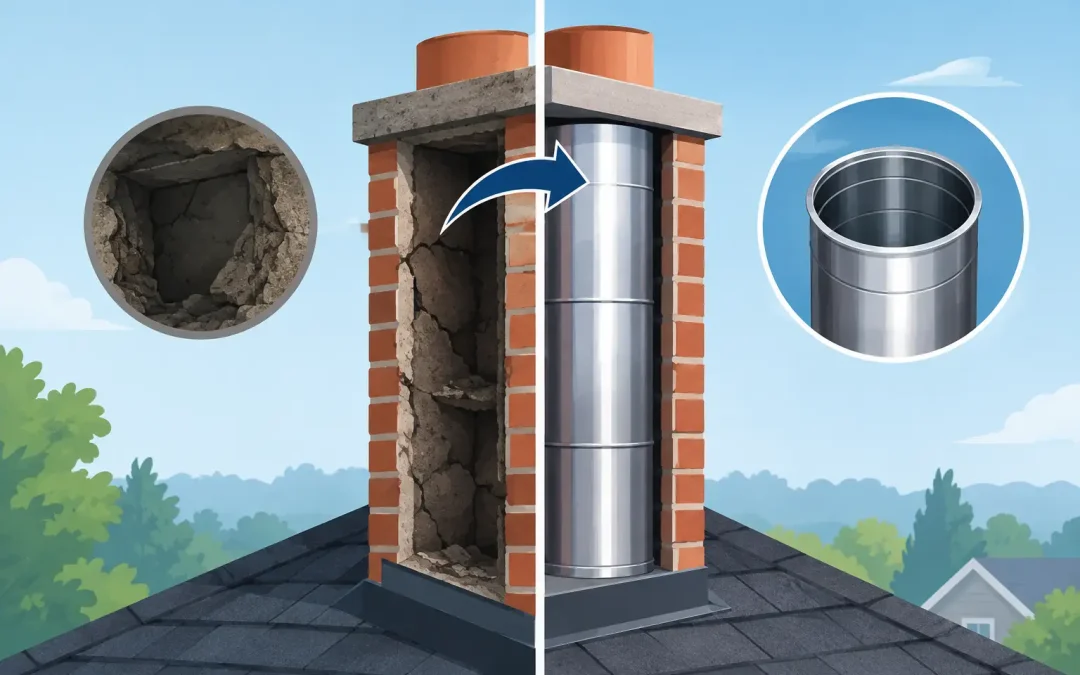
A chimney can look solid from the driveway while the part doing its most important work is failing inside. Chimney liner replacement is often needed when an aging liner can no longer safely carry smoke, exhaust gases, and heat from the appliance to the outdoors. For homeowners in Burlington, Oakville, Mississauga, Hamilton, and surrounding Southern Ontario communities, it is a repair worth addressing before it becomes a safety issue or causes further damage to the chimney structure.
The right answer is not always a new liner. In some cases, a chimney needs masonry repair, a roof-up rebuild, or removal of an unused stack instead. A proper inspection identifies the actual condition of the system, so you can spend money on the work that genuinely protects your home.
What a Chimney Liner Does
The liner is the channel inside a chimney that carries combustion by-products outside. It also helps protect the chimney masonry from heat, moisture, and corrosive exhaust. Older homes may have clay tile liners, while many newer or updated systems use stainless-steel liners sized for a particular wood, gas, or oil appliance.
When a liner is cracked, deteriorated, poorly sized, or missing, heat and gases may reach areas they should not. Mortar joints and bricks inside the chimney can deteriorate faster, and draft performance can suffer. In the most serious cases, a damaged liner can contribute to fire risk or allow carbon monoxide to enter the home.
A liner is not a one-size-fits-all product. The appliance, fuel type, chimney height, flue layout, and condition of the existing masonry all affect what is suitable. That is why a contractor should assess the complete chimney and venting system rather than simply recommend the liner material that is easiest to install.
Signs You May Need Chimney Liner Replacement
Homeowners rarely see the liner directly, but the chimney often provides clues. A smoky fireplace, a persistent odour after using a wood-burning appliance, or poor draft can point to a venting problem. White staining on exterior brick, crumbling mortar, damp patches near the chimney, and pieces of clay tile found in the fireplace or cleanout area can also signal deterioration inside the flue.
A chimney inspection may reveal cracked or displaced clay tiles, gaps in the liner, corrosion in a metal liner, or a liner that does not match the appliance now connected to it. This is common in older homes where a furnace, boiler, wood stove, or fireplace insert was changed years after the original chimney was built.
Water is a frequent contributor. Southern Ontario winters bring repeated freeze-thaw cycles, and water entering through a damaged crown, cap, flashing, or failing mortar can work its way into the chimney. Over time, that moisture can damage both the exterior masonry and the liner within.
A real estate inspection may also raise concerns about a chimney liner. That does not automatically mean the liner needs immediate replacement, but it should prompt a specialist assessment. A clear explanation of the condition and recommended scope is far more useful than guessing from a brief visual check.
Chimney Liner Replacement Starts With Inspection
Before recommending chimney liner replacement, the contractor should examine the chimney from top to bottom. This includes the exterior brickwork, crown, flashing, cap, firebox or appliance connection, and accessible portions of the flue. A camera inspection can be particularly helpful for identifying cracks, offsets, blockages, and hidden deterioration.
The inspection should also determine whether the chimney remains structurally sound. If the upper courses of brick are loose, mortar is badly washed out, or the stack is leaning or spalling, a liner installation alone will not solve the problem. The masonry may need restoration first. For a chimney that has deteriorated above the roofline, a roof-up rebuild can provide a sound structure for the new liner and help stop water from entering the system.
There are times when removal is the sensible choice. If a chimney no longer serves an appliance or fireplace and is in poor condition, repairing and lining it may not be the best investment. Chimney removal, completed with proper roof repair, can eliminate an ongoing leak and maintenance concern. The best option depends on how the chimney is used and what the inspection reveals.
Choosing the Right Type of Replacement Liner
Stainless-steel liners are commonly used for many chimney relining projects because they can be installed inside an existing masonry chimney and are available in sizes suited to different appliances. They may be rigid or flexible, depending on the flue path. A straight chimney may allow for a rigid system, while bends or offsets can call for a flexible liner.
Clay tile liners are traditional and can last a long time when properly built and maintained. However, replacing damaged clay tiles inside an existing chimney can be more involved, especially when access is limited or the surrounding masonry has deteriorated. In some situations, a different approved relining approach is more practical than attempting to replace individual tiles.
The correct size matters as much as the material. A liner that is too small may restrict draft. One that is too large can allow exhaust to cool too quickly, which may affect performance and increase condensation in certain systems. The right liner should be selected for the connected appliance and installed in accordance with applicable requirements.
What the Work Usually Involves
The process begins with protecting the work area and confirming the chimney is safe to access. The old liner or damaged components may need to be removed, and the flue may require cleaning before the new system is installed. If there is debris, a blockage, or broken clay tile inside, that needs to be dealt with rather than covered up.
The new liner is then installed from the top or bottom of the chimney, depending on the system and site conditions. Proper connections, insulation where required, a suitable top termination, and a chimney cap are all part of making the system perform as intended. The contractor should also check the crown, flashing, and surrounding brickwork, since a new liner deserves a chimney that can keep water out.
The job can be straightforward when the chimney is sound and the flue is accessible. It becomes more complex when there are bends, major internal damage, multiple appliance connections, or failing masonry above the roof. A trustworthy quote should reflect that reality. The lowest price is not a good value if it leaves water entry, loose brick, or an improperly connected liner behind.
Why Exterior Masonry Still Matters
A liner works inside the chimney, but the exterior structure remains essential. Spalling bricks, open mortar joints, and cracked crowns allow moisture into the stack. In winter, that water freezes and expands, gradually forcing bricks and mortar apart. What starts as a small repair can become a rebuild if it is left too long.
This is especially true around the roofline, where a chimney receives constant weather exposure. If the upper section is compromised, rebuilding the chimney from the roof up may be safer and more cost-effective than repeated patch repairs. It also provides the opportunity to address flashing and install a liner within a stable, properly restored chimney.
Wm. Townshend Limited approaches chimney work as a complete system. With a family trade heritage dating to 1925 and more than 40 years serving local homeowners, the focus is on identifying whether your chimney needs lining, masonry restoration, rebuilding, or removal – not applying a cosmetic fix to a deeper problem.
When to Arrange an Assessment
Do not wait for visible smoke in the home or a major masonry failure. Arrange an inspection if you notice loose brick, deteriorating mortar, water staining, draft problems, a damaged chimney cap or crown, or signs that an existing liner is failing. It is also wise to have the chimney assessed before connecting a new appliance to an older flue.
A well-planned repair can protect your home, preserve the appearance of its masonry, and give you confidence when using the appliance connected to that chimney. If something about your chimney does not look or perform as it should, a hands-on inspection is the best next step.
Recent Comments