
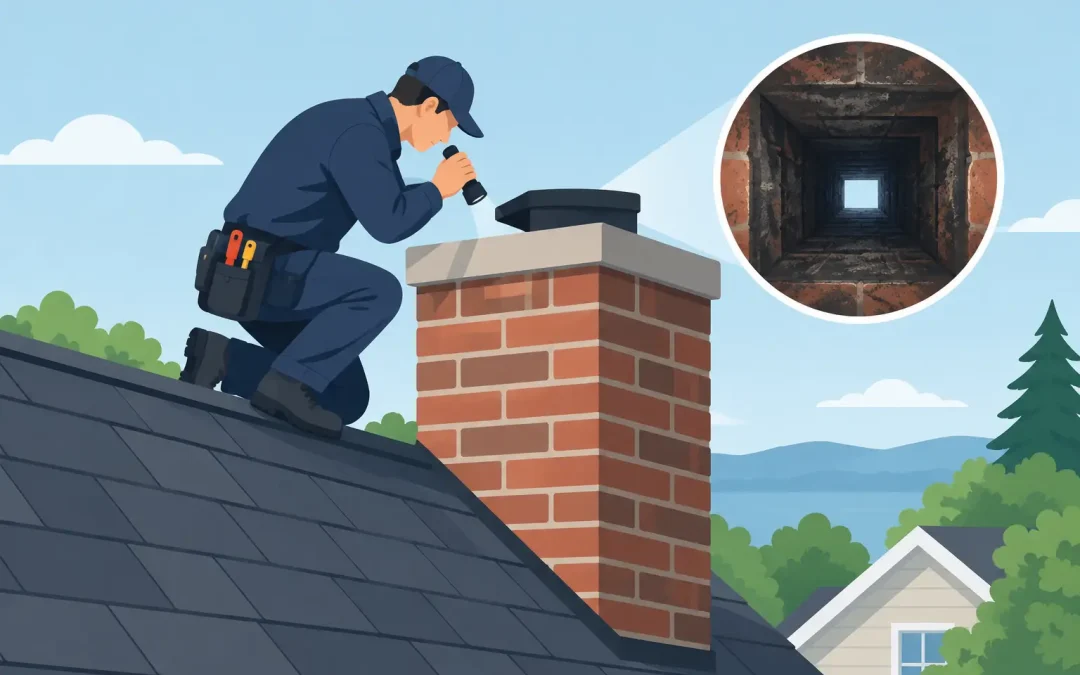
A chimney can look solid from the driveway while its mortar joints are opening, its bricks are absorbing water, or its upper courses are beginning to shift. A professional chimney inspection service gives homeowners a clear picture of what is happening above the roofline before a small repair becomes a leak, a safety concern, or a full rebuild.
For homes in Burlington, Oakville, Mississauga, Hamilton, and surrounding Southern Ontario communities, this matters more than many people realize. Our freeze-thaw weather is hard on exposed masonry. Rain enters small cracks, freezes, expands, and gradually breaks down mortar and brick faces. By the time damage is obvious from the ground, the chimney may already need more than a cosmetic patch.
What a Chimney Inspection Service Looks For
A proper chimney inspection starts with the structure itself, not just the fireplace opening. The chimney stack, crown, flashing, mortar joints, brick condition, and overall stability all need attention. These parts work together, and failure in one area can affect the rest.
An experienced masonry contractor will look for loose or spalled bricks, deteriorated mortar, open joints, cracking, leaning, failed repairs, and evidence of water entry. The inspection should also consider where the chimney meets the roof. Damaged flashing or poorly sealed roof transitions can allow water into the attic or living space, even when the chimney brickwork appears to be the main problem.
The crown at the top of the chimney deserves particular attention. This is the concrete or masonry cap that sheds water away from the stack. When it cracks or slopes improperly, water can travel directly into the brickwork below. Over several seasons, that moisture can weaken the upper chimney courses and cause widespread spalling.
If your chimney serves a wood-burning appliance, gas appliance, or fireplace, the flue and liner condition may also need review. A masonry inspection identifies visible structural concerns, while venting and appliance safety may require a qualified specialist using the appropriate inspection method. The right scope depends on how the chimney is used and the condition found on site.
Signs You Should Not Put Off an Inspection
Homeowners often call after seeing a water stain indoors or finding pieces of brick on the roof. Those are valid reasons to act, but an inspection is worthwhile well before damage reaches that stage.
Book a chimney inspection service if you notice crumbling mortar, cracked bricks, white staining on masonry, rusted flashing, loose pieces near the chimney, or brick faces that are flaking away. White staining, often called efflorescence, can indicate moisture moving through the wall. It does not always mean the chimney is failing, but it is a sign worth investigating.
A chimney that appears to lean, bulge, or separate from the house needs prompt professional attention. Structural movement is not a wait-and-see issue, particularly when it affects the portion above the roof. Wind exposure, water damage, and weakened mortar can make an already unstable stack more vulnerable.
Leaks are another common warning sign. A ceiling stain near the chimney does not automatically mean the roof is at fault. Water may be entering through cracked masonry, a failed crown, deteriorated flashing, or a combination of problems. An inspection helps identify the actual entry point so the repair addresses the cause rather than simply covering the symptom.
Older homes should also be checked periodically even without an obvious problem. Many original chimneys in Southern Ontario have seen decades of weather, previous repairs, and changing heating systems. A chimney can remain serviceable for a long time, but it needs sound brick, mortar, flashing, and support to do so safely.
Inspection Results Should Lead to the Right Repair
The goal of an inspection is not to sell the largest possible job. It is to determine what work will provide a lasting result. Sometimes the answer is localized tuckpointing, replacing a few damaged bricks, rebuilding a crown, or correcting flashing around the base of the chimney.
In other cases, especially where the chimney is deteriorating above the roofline, a roof-up rebuild is the proper repair. This involves carefully removing the compromised upper section and rebuilding it with sound materials, proper detailing, and secure integration at the roof. It is often a better long-term choice than repeatedly patching bricks and mortar that have already lost their strength.
There are trade-offs. Small repairs cost less upfront and can be appropriate when the surrounding chimney is stable. However, patching isolated areas on a badly weathered stack may only postpone the next failure. A good inspection should explain why a repair, partial rebuild, full rebuild, or removal is being recommended, including what can reasonably be preserved and what cannot.
Chimney removal may be the practical option when a chimney is no longer in use and has become a recurring maintenance problem. Proper removal is more than taking down masonry. The roof opening must be repaired correctly to maintain weather protection and a clean finished appearance. Homeowners should make sure the contractor can manage both sides of that work.
Why Surface Patching Can Be Misleading
It is understandable to want the simplest repair when a chimney starts looking rough. A coating, caulking line, or quick mortar patch can improve the appearance for a short time. But masonry repairs must allow the chimney to manage moisture properly. Applying the wrong material or sealing over active deterioration can trap water and accelerate damage behind the surface.
Matching repair materials matters as well. Mortar that is too hard for older brick can contribute to brick damage over time. Replacement bricks should be selected with the existing chimney in mind, and repairs should be built to shed water rather than collect it. These details are where chimney-specific experience makes a real difference.
A clear assessment gives you the chance to plan. If a repair can safely wait until warmer weather, you can schedule it around your budget and home projects. If the chimney is unstable or allowing significant water entry, you will know why prompt work is recommended. Either way, you are making the decision with useful information rather than guesswork.
When Is the Best Time to Schedule?
Spring is a popular time for chimney inspections because winter often exposes new cracking, spalling, and leaks. It also gives homeowners time to complete masonry work before the next cold season. Fall inspections are equally sensible, particularly before using a fireplace or heating appliance that vents through the chimney.
That said, visible damage should be assessed whenever you notice it. A loose brick in July can still become a serious problem in November. Waiting for the ideal season is rarely worthwhile when water is getting in or the chimney appears unstable.
Weather affects what work can be completed on a given day, especially mortar and masonry rebuilding. A dependable contractor will explain the timing honestly and recommend a safe temporary measure if permanent repairs need to wait for suitable conditions.
Choosing a Contractor for Chimney Inspection and Repair
Look for a contractor whose work is focused on chimneys and masonry, not one who treats the chimney as an afterthought. Ask whether the inspection includes the stack, mortar joints, crown, flashing, roof connection, and visible signs of structural movement. You should receive an explanation in plain language, not just a vague statement that the chimney needs attention.
It also helps to choose a local contractor familiar with the brick homes and weather patterns across the Halton, Hamilton, and Greater Toronto area. Wm. Townshend Limited brings a family trade heritage dating to 1925 and more than four decades of local chimney and masonry experience to this kind of work. That experience is especially valuable when deciding whether an aging chimney can be restored or needs to be rebuilt properly.
Take a few clear photos from the ground if you spot a concern, but do not climb onto the roof or pull at loose masonry yourself. A chimney inspection is a practical first step: it replaces uncertainty with a repair plan that protects your home, your roof, and the people living beneath it.
Recent Comments